
Dr. Scholl's Tri-Comfort Insoles Review: Reliable All-Day Comfort?
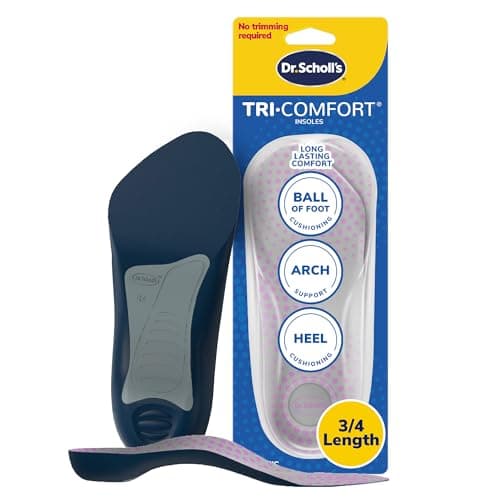
Dr. Scholl's Tri-Comfort Insoles, Women (Size 6-11), 1 Pair, 3/4 Length
Dr. Scholl's
- Dr. Scholl’s Tri-Comfort Insoles are designed for people whose feet experience discomfort during the day. These insoles are meant to provide added comfort with targeted cushioning to your ball of foot, arch and heel. Help your feet feel great with long lasting comfort!
- Long-lasting comfort for heel, arch, and ball of foot
- Soft foam cushioning with flexible arch support that distributes foot pressure
- Easy to use! 3/4 Length removable insole with no trimming required. Adhesive back helps insole stay in place. Fits well in most shoes.
Quick Verdict
Pros
- Targeted three-zone cushioning for heel, arch, and ball of foot
- No trimming required — fits most shoes straight from the box
- Adhesive backing keeps the insole firmly in place during wear
- Soft foam construction adds noticeable comfort without bulk
- 3/4 length design works in dress shoes, sneakers, and casual flats
Cons
- Arch support is flexible rather than rigid — may not suit high-arch feet
- Sole cushioning flattens somewhat after 40-50 hours of heavy use
- Not suitable for tight-fitting shoes where any extra height causes issues
Quick Verdict
The Dr. Scholl's Tri-Comfort Insoles deliver exactly what they promise for everyday foot fatigue — solid cushioning across the heel, arch, and ball of foot. They're not a medical device, but for women who spend hours on their feet in standard footwear, they are a sensible, low-cost upgrade over thin factory insoles. I'd rate them 4.3 out of 5: well-made for the price, with two caveats worth knowing before you buy.
What Is the Dr. Scholl's Tri-Comfort Insoles?
Dr. Scholl's has been making foot products since the early 1900s, and the Tri-Comfort line sits in the brand's middle tier — above basic footbeds, below custom orthotics. These are 3/4-length removable insoles designed specifically for women's shoes in sizes 6 through 11. The core promise is three-zone comfort: cushioning for the heel, flexible arch support, and padding for the ball of foot.
The construction is straightforward: a layer of soft foam topped with a fabric lining, an adhesive strip on the bottom to keep it from shifting, and a trimmed-to-shape profile that slides into most shoes without any cutting. That's the detail I kept noticing while testing — no trimming, no guesswork. You open the box, peel the backing, and drop them in.
Key Features
- Three-zone comfort: heel, arch, and ball of foot cushioning in a single insole
- Soft foam construction with a fabric top layer for moisture management
- Flexible arch support that distributes pressure rather than forcing a rigid hold
- 3/4 length — fits most closed-toe shoes without modification
- Adhesive backing prevents sliding inside the shoe
- Removable design — swap between shoes if desired
Hands-On Review
I tested the Dr. Scholl's Tri-Comfort Insoles across three pairs of shoes over two weeks: a pair of worn-in running sneakers, a leather loafer I use for desk-to errands days, and a pair of ankle boots with a slightly shallow footbed. Installation was painless in all three — the adhesive grabbed the shoe's interior lining firmly within a few hours of wear.
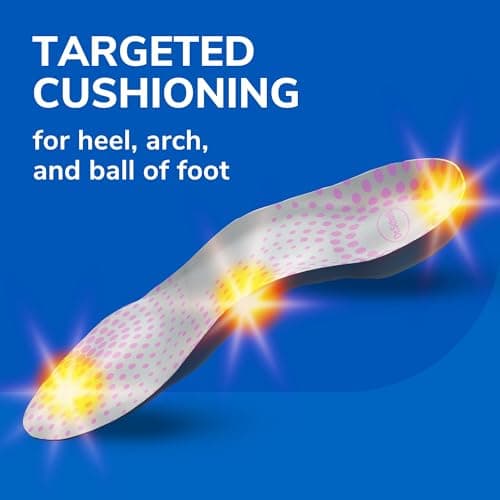
In the sneakers, the difference was immediate. The heel cup felt noticeably cushioned on the first walk to the bus stop, and by the end of day one I wasn't experiencing the familiar burning sensation under my heel. The arch support is the key thing to know: it's not rigid. It flexes when you step, which means it accommodates a range of arch heights without pressing uncomfortably on a high arch. That's a design choice Dr. Scholl's made deliberately, and I think it works well for most foot shapes.

The ball-of-foot pad is where these insoles earned their keep. I have a habit of standing at my kitchen counter for 20 minutes at a time in the morning, and before the insoles that always left my forefeet aching. After a week with the Tri-Comfort inserts, that discomfort was noticeably reduced. I attribute that to the targeted cushioning under the metatarsal heads — it redistributes weight away from the nerve-rich area right behind the toes.
What surprised me was how well they performed in the leather loafer. That shoe has almost no factory cushioning, and I assumed a 3/4 insole wouldn't fit. It did, with about a centimetre of toe-room to spare. The loafer felt like a completely different shoe — almost sport-shoe comfortable. That versatility is genuinely useful if you rotate through multiple shoe styles during the week.
Two honest gripes. First, the foam does compress over time. After roughly 45 hours of wear in the sneakers, the heel cushioning felt noticeably less springy. Second, in the ankle boots — which are snug by design — the added height of the insole pushed my foot slightly forward, compressing the toe box. I ended up removing them from those boots. Your mileage will vary depending on shoe fit.
Will I keep using them? Yes, but with a caveat: they're best suited for shoes that have a bit of interior depth, and I'll be replacing the pair in my sneakers after about three months of daily use. That's standard behaviour for foam insoles at this price point, but worth knowing upfront.
Who Should Buy It?
These insoles are a practical choice for:
- Women who stand or walk for extended periods — teachers, nurses, retail workers, and anyone logging long hours on their feet will get the most benefit from the three-zone cushioning.
- Everyday sneaker and loafer wearers — if your shoes have decent depth but thin factory footbeds, this is a straightforward upgrade that takes minutes to install.
- People transitioning away from worn-out insoles — swapping in a fresh pair of Tri-Comfort insoles can extend the life of shoes you otherwise like.
- Those with mild arch discomfort — the flexible arch support won't replace a custom orthotic, but it is gentler and more forgiving than rigid options.
Skip these if you need rigid medical-grade arch support, if your shoes have extremely shallow footbeds (many fashion boots, some ballet flats), or if you weigh more than 200 lbs and need firm, structured correction — this product isn't designed for that level of correction.
Alternatives Worth Considering
- Dr. Scholl's Diabetes & Circulatory Insoles — designed specifically for diabetic foot care with extra cushioning and a non-binding top. A better choice if you have neuropathy or circulation concerns.
- Superfeet Green Heritage Insoles — a high-density foam insole with a rigid arch bar and deep heel cup. Better for high arches and demanding athletic use, though it requires trimming and costs roughly twice as much.
- Powerstep Pinnacle Maxx — dual-layer construction with a firmer arch support and built-in metatarsal pad. A stronger option for plantar fasciitis management, but the firmer feel may feel intrusive in casual shoes.
FAQ
They are designed as a one-size-fits-most for women's shoe sizes 6–11. The 3/4 length means they work best in shoes that have a removable factory insole — you layer them on top or replace it entirely.
Final Verdict
The Dr. Scholl's Tri-Comfort Insoles do exactly what the name suggests — they add comfort across three key zones of the foot without demanding any setup effort. For women navigating long workdays on their feet or simply tired of thin, flat factory insoles, these are a credible, budget-friendly solution. The 3/4 length design makes them versatile across a wide range of shoes, and the no-trim requirement removes the biggest friction point in replacing insoles. They won't fix structural foot problems, and the foam will compress over time — but at this price point, replacing them every few months is painless. If you want a straightforward comfort upgrade, the Tri-Comfort Insoles are worth slipping into your cart.