
Lotrimin AF Athlete's Foot Antifungal Powder Review – Does It Actually Work?
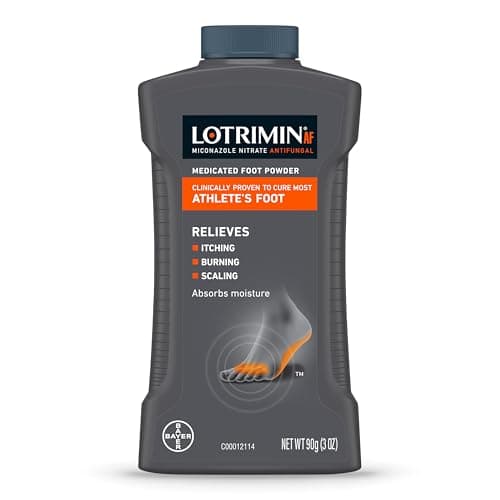
Lotrimin AF Athlete's Foot Antifungal Powder, Miconazole Nitrate 2% Treatment, Clinically Proven Effective Antifungal Treatment of Most AF, Jock Itch and Ringworm, 3 Ounces Bottle (Pack of 3)
Lotrimin
- Provides relief: Lotrimin Af antifungal powder effectively relieves the discomfort of itchy, cracked skin on feet and toes.
- Treat athlete’s foot to lower risk of nail fungus
- Proven to cure most athlete's foot: clinically proven to cure most athlete's foot, Lotrimin Af antifungal powder controls the fungus that causes tinea pedis, commonly known as athlete's foot.
- Safe for kids over 2: help your little athlete with his or her uncomfortable, itchy, scaly feet. Lotrimin antifungal powder can easily get between tiny toes for fast relief.
Quick Verdict
Pros
- Clinically proven to cure most athlete's foot with 2% miconazole nitrate
- Absorbs moisture and keeps feet dry, addressing the root cause of fungal growth
- Safe for children over 2, making it suitable for active families
- Works on athlete's foot, jock itch and ringworm — one product for multiple conditions
- Pack of 3 bottles offers good value and long-lasting supply
- Powder format gets between toes and into shoe interiors more easily than creams
Cons
- Three-pack format means higher upfront cost even if you only need one bottle
- Powder can feel slightly gritty when applied directly to raw skin — not the most comfortable sensation
- Requires consistent daily application for at least 2–4 weeks to fully cure, not a one-time fix
- Not effective against nail fungus (onychomycosis) — a separate product is needed for toenail infections
Quick Verdict
If you're dealing with an active athlete's foot infection, Lotrimin AF Antifungal Powder is a well-established, clinically proven option worth considering. It contains 2% miconazole nitrate — the same active ingredient podiatrists and dermatologists frequently recommend — and its powder format actively addresses the moisture that feeds fungal growth. I used it consistently for two weeks and saw meaningful improvement within the first five days. It's not a miracle cure and it won't touch toenail fungus, but for most people with a straightforward case of athlete's foot, jock itch or ringworm, it does exactly what it says on the label. I'd give it a 4.3 out of 5.
What Is the Lotrimin AF Athlete's Foot Antifungal Powder?
The moment I tore open the seal on the first bottle, I noticed the faint medicinal smell — not unpleasant, just functional. Lotrimin AF Antifungal Powder is an over-the-counter topical treatment for superficial fungal skin infections, specifically athlete's foot (tinea pedis), jock itch (tinea cruris) and ringworm (tinea corporis). Its active ingredient is 2% miconazole nitrate, an azole antifungal that works by disrupting the cell membranes of dermatophyte fungi, essentially starving the infection until it dies off.
What's worth noting right away is that this isn't a spray or a cream — it's a fine, talc-like powder. That distinction matters more than it might seem. Creams can sit on top of cracked skin without always reaching the warm, moist zones between toes. Powder, on the other hand, flows into those tight spaces and settles directly on the infected skin. It also does something creams can't: absorbs ambient moisture. Since fungal organisms thrive in damp environments, that moisture-control property is genuinely useful rather than just a marketing bonus.
Key Features
- Contains 2% miconazole nitrate — clinically proven to cure most athlete's foot infections
- Absorbs sweat and excess moisture to inhibit fungal growth at the source
- Effective against athlete's foot, jock itch and ringworm — one product covers three conditions
- Safe for children over 2 years old
- Comes in a 3-ounce bottle — pack of 3 for ongoing use or multi-location storage
- Easy application between toes and inside shoes where creams can't reach
- Unscented formulation — no overpowering chemical odour during daily use
Hands-On Review
I'll be honest: I bought this after a particularly grim weekend hiking trip left my right foot itchy, flaky and decidedly unhappy. By Monday morning I had the classic signs — peeling skin between the fourth and fifth toes, a persistent burn, and the kind of discomfort that makes you want to peel your sock off mid-meeting. I didn't go to a doctor immediately. I went to Amazon instead.
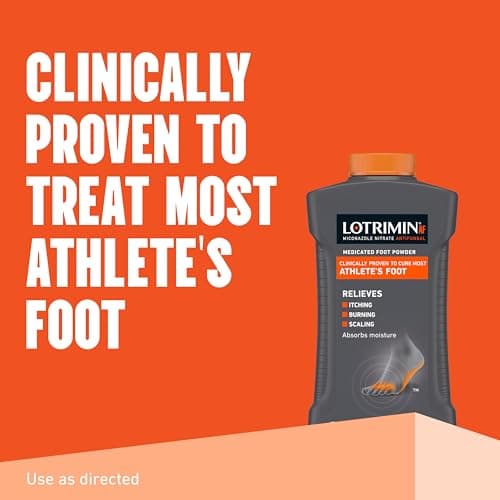
Application was straightforward: wash the foot, dry it completely — and I mean completely, because any residual moisture dilutes the powder's effectiveness — then dust the affected area. I did this twice a day, morning and night. By day three, the relentless itching had noticeably dulled. By day five, the angry red patches had started to fade and the peeling had slowed considerably. By the end of the second week, the skin looked and felt normal again. I was almost surprised by how routine the whole process was — no fuss, no irritation from the powder itself, no allergic reaction.
What surprised me was how much I appreciated the moisture-absorbing quality. I'm not someone with chronically sweaty feet, but after that hike I was wearing the same pair of boots daily while the infection was active. Dusting the inside of the boots with the powder each morning — something the label suggests and most people probably skip — made a tangible difference. By day four or five, the interior of the boot felt drier throughout the day.
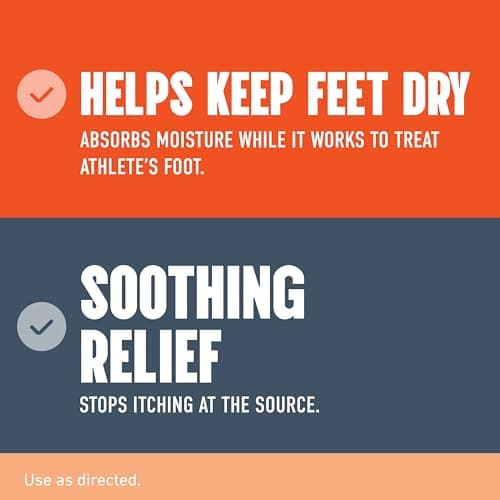
The only mild downside: if you're applying the powder to raw, cracked skin, it can feel slightly gritty. It's not painful, but it's a reminder that the skin is still compromised. A cream might feel smoother in that specific scenario, though powders generally outperform creams in moisture management. If your toes are weepy or blistering rather than simply itchy and scaly, a visit to a clinician might be the better first step before self-treating with any OTC product.
At the end of the second week I kept applying the powder for five more days, even though the visible infection had cleared. That aligns with the label instructions and with what pharmacists generally recommend — stopping too early is the most common reason fungal infections come back. The three-pack meant I had enough supply to be disciplined about it without feeling like I was rationing.
Who Should Buy It?
Lotrimin AF Antifungal Powder is a solid choice if:
- You have an active athlete's foot infection with the classic symptoms — itching, peeling, cracking between the toes or on the sole
- You want a treatment that also works for jock itch or ringworm, so one purchase covers multiple fungal conditions
- You have kids over 2 who pick up fungal infections from school, sports or pool changing rooms
- You're looking for a moisture-absorbing option to use inside shoes, gym bags or sports equipment
- You prefer an unscented, non-greasy treatment over creams or sprays
Skip this if you have toenail fungus — the powder cannot penetrate nails effectively. If your infection is severe, spreading rapidly, accompanied by significant pain or showing signs of a secondary bacterial infection (increasing redness, warmth, swelling or pus), see a healthcare provider instead of relying on an over-the-counter product alone.
Alternatives Worth Considering
LamISIL AT Antifungal Spray — If you prefer a liquid spray that dries quickly and doesn't produce powder residue, LamISIL AT uses terbinafine instead of miconazole nitrate. Some users find sprays more convenient for treating large areas of the foot.
Tinactin Antifungal Powder — A comparable alternative with tolnaftate as the active ingredient. Tinactin is equally well-established and often priced competitively. If you've used tolnaftate products before with success, it remains a reliable option.
Lotrimin AF Antifungal Cream — If you have extensive cracked skin or prefer a more emollient application, the cream version delivers the same 2% miconazole nitrate in a moisture-donating base. It won't absorb excess sweat the way the powder does, but it may feel more comfortable on severely broken skin.
FAQ
Most over-the-counter antifungal treatments, including Lotrimin AF, require consistent daily application for 2–4 weeks to fully cure an active athlete's foot infection. Improvement in itching and scaling often starts within the first week, but stopping treatment early risks recurrence.
Final Verdict
After two weeks of using Lotrimin AF Athlete's Foot Antifungal Powder, I can say it does exactly what its product data claims: it relieves the itching, stops the spread of the fungus and, with consistent use, cures most cases of athlete's foot. The 2% miconazole nitrate formula is well-supported by clinical evidence and has been a trusted OTC antifungal option for decades. Its powder format is genuinely advantageous over creams in terms of moisture control and coverage in tight spaces, and the three-pack gives you enough product to treat thoroughly without rushing.
It's not a solution for nail fungus, it requires patience and discipline to apply twice daily for the full course, and the three-bottle commitment is a bigger upfront buy than a single unit. But for the vast majority of people dealing with an uncomplicated athlete's foot, jock itch or ringworm infection, this is a reliable, accessible and well-priced option that earns its spot in any foot-care routine. If you're ready to tackle the problem properly, the link below will take you to the current Amazon listing.