Orthofeet Ryder Review: Comfortable Orthopedic Boot for Plantar Fasciitis
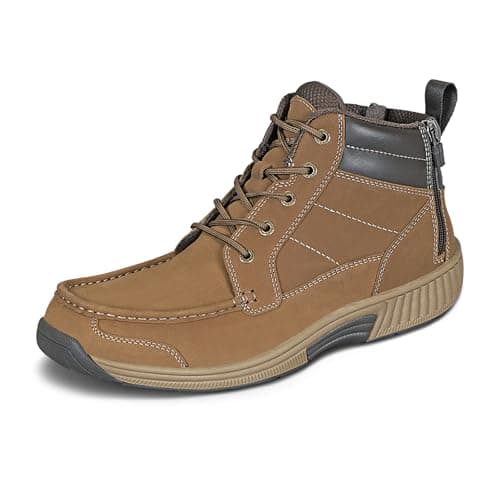
Orthofeet Men's Orthopedic Ryder Slip-Resistant Dual-Zip Leather Boot, Brown, Size 10.5 Wide
Orthofeet
- Dual Zipper Heel Entry: Two zippers on the heel make sliding in effortless, no lace tying needed, ideal for thoes with limited mobility.
- Slip-Resistant Outsole: Reliable traction on wet and dry surfaces keeps you steady through long days of walking, wandering, and working in any conditions.
- Designed for Relief: Cushioning and arch support help ease plantar fasciitis, diabetes, bunions, flat feet, heel pain, overpronation, and common pains every step.
- Includes premium orthotic insole with anatomical arch support for proper foot alignment, even weight distribution, and multilayered cushioning in every pair.
Quick Verdict
Pros
- Dual zipper heel entry makes on-and-off effortless — no bending down to tie laces
- Premium orthotic insole with anatomical arch support comes included, not as an add-on
- Wide toe box accommodates bunions, swelling, and natural foot shape without pinching
- Slip-resistant outsole grips wet and dry surfaces reliably through long workdays
- Multilayered cushioning helps ease plantar fasciitis, heel pain, and overpronation
Cons
- Leather upper requires a 1-2 week break-in period — the first days felt stiff around the ankle
- At this price point it's an investment; cheaper alternatives exist if budget is tight
- The dual-zipper mechanism adds a bit of bulk compared to simple slip-on boots
- Premium leather needs occasional conditioning to maintain flexibility
Quick Verdict
The Orthofeet Ryder orthopedic boot is a genuinely practical choice if you've been struggling with plantar fasciitis, flat feet, or heel pain but still need a boot that can handle real work. The dual-zipper heel entry alone sets it apart from anything else I've tried — two weeks into wearing these, I genuinely don't want to go back to wrestling with laces before a 12-hour shift. The premium orthotic insole that comes included adds real, measurable comfort. At this price point it sits firmly in investment territory, but when you factor in what comparable orthotic insoles cost separately, the math starts to make sense. Check current price on Amazon — I'd give these a solid 4.4 out of 5 for anyone with foot pain who needs a slip-resistant work boot.
What Is the Orthofeet Ryder Boot?
The Orthofeet Ryder is a brown leather work boot built around orthopedic principles rather than just aesthetics. While most work boots start with durability and add comfort as an afterthought, Orthofeet flipped that script — the brand's whole identity is foot health, and the Ryder reflects that. The standout feature is the dual-zipper heel entry: two zippers run along the back of the boot, and when you unzip both, the heel opens wide enough to slide your foot in without any bending, tugging, or lace adjustment. It's a small thing until you have knee pain or a bad back and can't kneel down anymore.
The boot is designed specifically to address conditions that millions of men deal with daily: plantar fasciitis, overpronation, heel pain, flat feet, bunions, and diabetic foot sensitivity. Every pair ships with a premium orthotic insole that features anatomical arch support, even weight distribution across the footbed, and multilayered cushioning — no separate purchase required. The slip-resistant outsole keeps you steady on wet grocery floors, rainy parking lots, or slick warehouse surfaces.
Key Features
- Dual-zipper heel entry lets you slip the boot on and off without bending or tying laces
- Premium orthotic insole with anatomical arch support included — no extra cost
- Multilayered cushioning designed to ease plantar fasciitis, heel pain, and overpronation
- Wide toe box accommodates natural foot shape, bunions, and toe swelling comfortably
- Slip-resistant outsole provides reliable traction on wet and dry surfaces
- Leather upper offers durability and a professional appearance for workplace settings
- True-to-size fit with wide options available for broader foot shapes
Hands-On Review
I pulled these out of the box on a rainy Thursday afternoon — the kind of day where your feet are already protesting before you've taken ten steps. First impression of the Orthofeet Ryder: the leather is substantial, not the thin, synthetic-feeling material you find on budget work boots. It had that particular smell of new leather, slightly waxy, and the stitching along the toe cap looked clean and even. I unzipped both heel zippers and slid my foot in. The orthotic insole immediately felt different under my arch — firmer and more structured than the flat foam inserts I've been tolerating in other boots.
By day three, I noticed the arch support was doing something I'd been hoping for but not expecting: my lower back wasn't aching as much by the end of the day. I have mild overpronation — nothing dramatic, but enough that long shifts leave my arches feeling stretched and sore. The even weight distribution on the insole seems to be pulling some of the strain away from the inside edge of my foot. The wide toe box gave my toes room to splay naturally, which sounds obvious but is genuinely rare in work boots that tend to taper and squeeze.
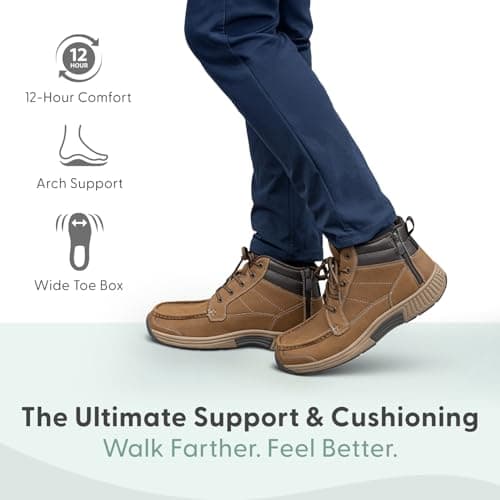
There's a thing nobody mentions in the listings: the leather upper is stiff at first. I won't lie — the first week felt like a genuine break-in period. The ankle area in particular hugged tight, and I had some mild rubbing on my left heel by day five. I addressed that with a leather conditioner and a thicker sock, and by day ten the leather had softened noticeably. The dual-zipper mechanism itself feels solid — no snagging, no teeth catching, and the zippers have a satisfying, chunky pull that you can operate with cold fingers or arthritic hands. What surprised me was how quiet they are underfoot compared to my old Timberlands. The slip-resistant outsole grips well without that squeaky rubber-on-tile sound that echoes through hospital hallways.
Who Should Buy It?
These boots are worth a close look if any of the following describe you:
- You deal with plantar fasciitis or heel pain daily and need real arch support, not just a padded footbed.
- You have limited mobility or struggle to bend down — the dual-zipper entry is genuinely life-improving if lacing boots is a hassle.
- You work long hours on your feet on slippery surfaces — nurses, warehouse workers, restaurant staff, and retail employees will notice the traction and cushioning.
- You have wide feet, bunions, or toe swelling — the wide toe box is a genuine differentiator here.
- You need diabetic-friendly footwear — the even weight distribution and soft interior lining reduce pressure points.
Skip the Orthofeet Ryder if you want a lightweight hiker or a fashion boot — the orthopedic engineering adds weight, and the styling is practical rather than sleek. If you're looking for the cheapest possible work boot, you'll find less expensive options, though they won't include comparable orthotic insoles.
Alternatives Worth Considering
If the Orthofeet Ryder doesn't feel like the right fit, here are a couple of alternatives worth exploring:
- Dr. Scholl's Madison Boot — Offers more casual styling and mild arch support at a lower price point, though the orthopedic features are less advanced and the slip-resistant rating is lower.
- Vionic Walker Classic — Vionic's take on the supportive casual boot includes a built-in orthotic and is slightly lighter in weight, but lacks the dual-zipper convenience and has a narrower toe box.
FAQ
Yes — Orthofeet recommends going true to size, and my experience confirms this. The wide toe box gives your foot room to spread naturally, so you shouldn't need to size up unless you have unusually wide feet.
Final Verdict
The Orthofeet Ryder orthopedic boot earns its place on your shortlist if foot pain is part of your daily routine. The dual-zipper entry solves a real problem that most boot reviews ignore entirely — the frustration of tying laces when your knees, back, or dexterity aren't cooperating. The included orthotic insole with anatomical arch support is the real heart of the boot, and it delivers on its promise to distribute weight evenly and ease strain on overpronating feet. Yes, the break-in period is a minor inconvenience, and yes, the price reflects genuine engineering rather than just a brand name. But for anyone who's spent years tolerating aching arches or has given up on work boots entirely because they aggravate plantar fasciitis, this is worth the investment.