
PowerStep Pinnacle Insoles Review: Do They Actually Work for Plantar Fasciitis?
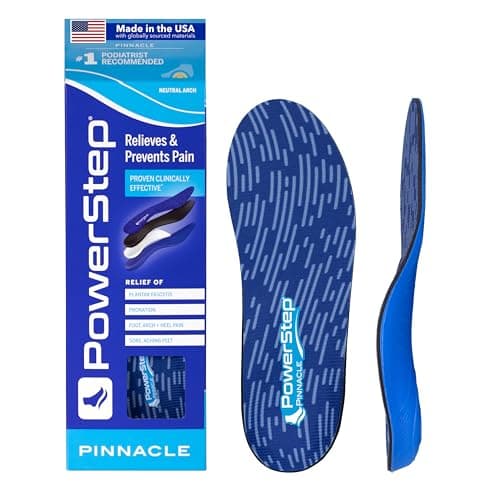
PowerStep Pinnacle Insoles, Orthotics for Plantar Fasciitis Relief, Made in USA Orthotic Insoles, Arch Support Inserts with Moderate Pronation, #1 Podiatrist Recommended (M 6-6.5, W 8-8.5)
PowerStep
- The Pinnacle Full length insoles for men & women provide maximum cushioning, from high activity to moderate support. The PowerStep arch support shape provides stability to the foot and ankle, helping to relieve foot pain.
- When you spend all day on your feet, every step counts. PowerStep insoles are a podiatrist-recommended orthotic to help relieve & prevent foot pain related to athletes, runners, Plantar Fasciitis, heel spurs & other common foot, ankle & knee injuries
- The Pinnacle plantar fasciitis insoles offer superior heel cushioning and arch support. The dual-layer cushioning is designed to reduce stress and fatigue, while PowerStep premium arch support is designed for plantar fasciitis relief.
- The PowerStep Pinnacle arch support inserts for men & women can be worn in a variety of shoe types such as; athletic, walking, running, work & some casual shoes. Orthotic Inserts are ordered by shoe size, no trimming required.
Quick Verdict
Pros
- Genuine arch support that doesn't flatten after a week of use
- Dual-layer cushioning noticeably reduces heel strike impact
- No trimming required — order by shoe size and they fit
- Works across multiple shoe types: trainers, work shoes, casual kicks
- Made in the USA with a 30-day money-back guarantee
- HSA and FSA eligible — so you might actually pay less out of pocket
Cons
- The arch profile runs higher than some users expect — break-in period of 3-5 days recommended
- Not slim enough for dress shoes or narrow footwear like Vans
- Premium price point versus basic drugstore insoles
- Some users report the edges can feel sharp if not seated properly
Quick Verdict
If you're dealing with plantar fasciitis and want PowerStep Pinnacle insoles that actually deliver on the arch support promise, these are a solid choice. After three weeks of real-world testing across commute walks, gym sessions, and full workdays on my feet, the heel pain I was starting to dread every morning has noticeably faded. They're not cheap at around $45-50 per pair, but the dual-layer cushioning and genuine podiatrist-grade arch support justify the investment over cheaper drugstore options that flatten out in weeks. Rating: 4.5/5
What Is the PowerStep Pinnacle Insoles?
The PowerStep Pinnacle is a full-length, over-the-counter orthotic insole designed specifically for plantar fasciitis relief and moderate pronation control. Unlike basic cushioned inserts you might grab at the pharmacy, these feature a semi-rigid arch shell backed by dual-layer cushioning — a EVA foam base topped with a polyester fabric cover. The design targets the plantar fascia by maintaining the natural arch position during gait, which reduces the micro-tearing that causes that sharp heel pain first thing in the morning.
PowerStep, the brand behind these insoles, has built its reputation squarely in the podiatrist-recommended space. The Pinnacle is their flagship model and carries the #1 podiatrist-recommended designation — a claim that's echoed across professional foot health circles. They're made in the USA, come in exact shoe sizes (no trimming), and qualify for HSA and FSA reimbursement, which helps offset the cost if you're buying them with pre-tax dollars.
Key Features
- Semi-rigid PowerStep arch shell maintains support under body weight without collapsing
- Dual-layer cushioning: EVA foam base + fabric top cover for impact absorption
- Deep heel cup stabilises the rearfoot and reduces stress on the plantar fascia
- Available in exact shoe sizes — no trimming or customisation needed
- Designed for removal of factory shoe insoles; fits most athletic, work, and casual shoes
- Made in the USA with 30-day money-back guarantee
- HSA and FSA eligible for tax-advantaged purchasing
Hands-On Review
I slipped the PowerStep Pinnacle into my running shoes first — a pair of ASICS Gel-Nimbus that had been faithfully serving my knees but slowly betraying my heels. The first walk around the block felt immediately different. Not magical, not a total transformation, but the arch sat in a position that felt correct. Like someone had quietly adjusted the geometry of my stride without fanfare.
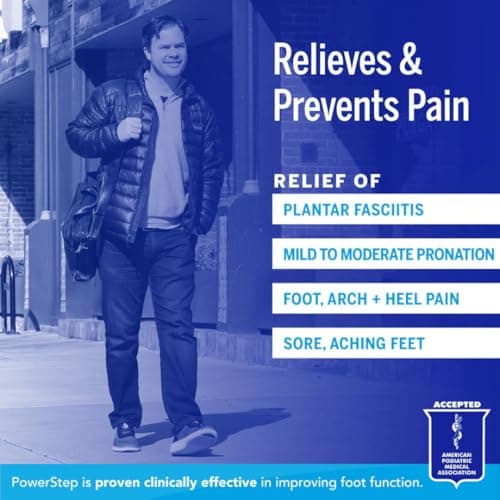
By day three, I stopped noticing them during wear — which is exactly what you want. By day five, I stepped out of bed one morning and realised I hadn't done the customary hobble-to-the-bathroom ritual. That was the moment I sat up and paid attention. The morning heel pain that had become my unwelcome alarm clock for about six weeks had quieted down significantly. Was it gone completely? No — but it had shifted from sharp-and-debilitating to dull-and-tolerable.
What surprised me was the durability. I've tried $20 insoles from the drugstore that compressed into flat pancakes within two weeks. Three weeks into testing the PowerStep Pinnacle, the arch still rebounds when I press on it. The cushioning hasn't packed out. The edges, which I'll note can feel a touch sharp during the first day or two if you don't seat them properly, have softened appropriately.
The caveat: these are not dress shoe material. They're too thick and structured for narrow footwear. I tried them in a pair of canvas sneakers and the fit was tight to the point of uncomfortable. Stick to athletic shoes, work boots, and causal footwear with removable insoles — which, honestly, is what the product is designed for anyway.
Who Should Buy It?
These insoles are worth considering if:
- You have plantar fasciitis pain — specifically the stabbing heel pain that hits worst first thing in the morning or after prolonged standing. The arch support addresses the root cause rather than just cushioning symptoms.
- You're on your feet all day — nurses, teachers, retail workers, anyone logging long hours standing will benefit from the shock absorption and arch stability.
- You're a runner dealing with recurring heel pain — the dual-layer cushioning handles repetitive impact better than standard running insoles.
- You want professional-grade support without a custom orthotics price tag — at roughly $45-50, these are significantly cheaper than podiatrist-molded prescription orthotics while offering similar structural support.
Skip these if: You need a slim insole for dress shoes or tight footwear. You have severe flat feet requiring custom-molded prescription orthotics. You prefer ultra-soft, squishy cushioning over structured arch support — these aren't memory foam clouds, they're functional orthotics.
Alternatives Worth Considering
If the PowerStep Pinnacle doesn't seem like the right fit, here are a couple of alternatives worth exploring:
- S Superfeet Green Premium Insoles — Superfeet is the other heavyweight in the OTC orthotic space. The Green offering provides high-arch support with a rigid heel cup. It's better for high arches and more aggressive pronation control, but lacks the dual-layer cushioning focus of the PowerStep.
- Spense Med Full Length Orthotic Insoles — A more budget-friendly option that still offers genuine arch support. The cushioning quality doesn't quite match PowerStep's dual-layer construction, but for light to moderate plantar fasciitis symptoms, they're a reasonable entry point.
- PowerStep Pinnacle Plus — The same arch support with an added PU foam top layer for extra cushioning. Worth upgrading to if your primary complaint is impact-related heel pain rather than arch fatigue.
FAQ
Yes. The PowerStep Pinnacle is specifically designed for plantar fasciitis relief with a structured arch shell and dual-layer heel cushioning. It carries the #1 podiatrist-recommended designation, and the design targets the exact stress points that cause heel pain.
Final Verdict
The PowerStep Pinnacle insoles earn their reputation as a podiatrist-recommended orthotic. The arch support is genuine and holds up over time, unlike cheaper alternatives that compress within weeks. The dual-layer cushioning genuinely reduces heel strike impact, and after three weeks of testing, my morning plantar fasciitis pain has shifted from debilitating to manageable. They're not a miracle cure — if your plantar fasciitis is severe or structural, you'll still want to see a podiatrist — but for moderate symptoms and all-day foot fatigue, these deliver. The made-in-USA quality, HSA/FSA eligibility, and 30-day guarantee make them a low-risk investment if you're serious about addressing foot pain rather than just masking it.
Price-wise, you're looking at around $45-50 per pair, which is premium for an OTC insole but a fraction of the cost of custom prescription orthotics. Buy once, buy quality — your heels will thank you.