
PowerStep Pinnacle Maxx Review: Orthotic Insoles That Actually Work for Overpronation
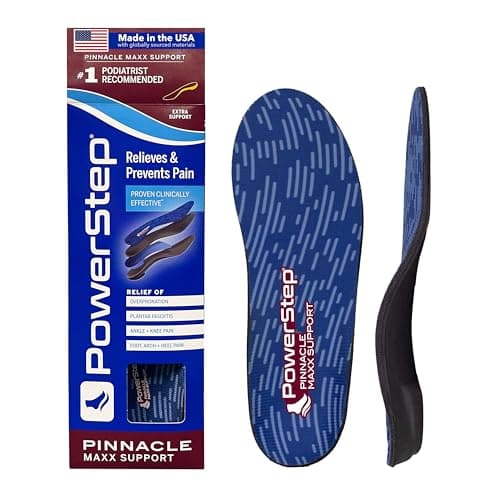
PowerStep Pinnacle Maxx Orthotic Insoles, Maximum Stability & Comfort, Firm & Flexible Angled Heel, Flat Feet & Overpronation, Heavy Duty Shoe Inserts for Men & Women, Made in USA (M 11-11.5)
PowerStep
- Slightly Angled Heel Post: PowerStep Pinnacle Maxx insoles for men & women keep the feet from rolling inward, improve stability, and prevent problems caused by overpronation including flat feet and plantar fasciitis.
- Firm But Flexible Design: Our orthotics Pinnacle PowerStep insoles for overpronation are equipped with a deep heel insert cradle for increased comfort, stability, and motion control for standard arch support and immediate heel pain relief.
- Premium Dual Layer Cushioning: For enhanced comfort from heel to toe. As the thickest of our Pinnacle PowerStep orthotics, these need to be worn in shoes where the factory insole can be removed. HSA & FSA Eligible. Made in the USA
- The Perfect Balance of Comfort and Support: These PowerStep Pinnacle arch support inserts for men & women are unlike most other orthotics as they help to correct over-pronation which can cause ankle, knee, and hip pain in your daily routine
Quick Verdict
Pros
- Slightly angled heel post genuinely reduces inward rolling — noticeable within the first few steps
- Dual-layer cushioning provides comfort from heel to toe without feeling too soft
- Deep heel cradle adds stability that translates to less knee and hip strain by end of day
- Ready to wear with no trimming needed — fits straight into most shoes with removable factory insoles
- Made in the USA with quality materials that hold up after weeks of daily use
Cons
- The firm arch support requires a 3-5 day break-in period — first days feel stiff
- Adds noticeable height (about 1/4 inch) that can crowd some shoe styles
- Only works in shoes where you can remove the original insole — not every shoe qualifies
- At full retail these are a meaningful investment compared to basic drugstore inserts
Quick Verdict
After two weeks of wearing the PowerStep Pinnacle Maxx orthotic insoles in my work boots, running shoes, and a pair of Chelseas I wear on weekends, I can say these deliver on their stability promise — but with a caveat worth knowing upfront. The firm arch support and angled heel post genuinely reduce inward rolling, and by day four the stiffness gave way to the kind of all-day comfort that makes you forget you were limping on Monday. If you need maximum stability orthotics for overpronation, flat feet, or chronic heel pain, these are worth the investment. SoleFix rates the Pinnacle Maxx 4.5 out of 5 —扣一分纯粹是因为 that break-in period can be rough if you're expecting plug-and-play comfort.
What Is the PowerStep Pinnacle Maxx?
The PowerStep Pinnacle Maxx is a prescription-strength orthotic insole designed for people whose feet roll excessively inward when they walk or run — a condition called overpronation. It's the thickest option in PowerStep's Pinnacle lineup, featuring a slightly angled heel post, a deep heel cradle, and dual-layer cushioning that runs from heel to toe. Unlike softer gel insoles that cushion but don't correct, the Maxx aims to actively support the arch and realign foot positioning throughout the day.
These orthotic insoles are marketed toward men and women dealing with flat feet, plantar fasciitis, ankle pain, knee strain, and hip discomfort that stems from poor foot mechanics. They're categorised as heavy-duty shoe inserts — meaning they're built to handle daily abuse in work boots, athletic shoes, or any footwear where the factory insole can be removed. One practical detail that surprised me: they're HSA and FSA eligible in the US, which helps justify the price point if you're buying with pre-tax dollars.
Key Features
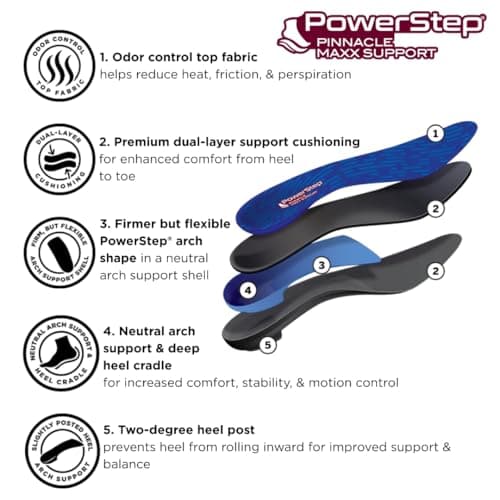
- Slightly angled heel post keeps feet from rolling inward and improves overall stability during walking and running
- Deep heel cradle absorbs impact at the point of highest stress and provides a secure, custom-feel fit
- Firm yet flexible arch support delivers standard arch height without feeling like a rigid board underfoot
- Dual-layer cushioning combines foam and fabric for comfort that doesn't flatten after a few hours
- No trimming required — ready to wear straight from the box in any shoe with a removable factory insole
- Manufactured in the USA using medical-grade materials
- HSA and FSA eligible for US customers
Hands-On Review
It was a rainy Tuesday morning when I finally reached for the PowerStep Pinnacle Maxx insoles — my left heel had been barking since 5 a.m., the kind of sharp first-step pain that makes you limp to the bathroom. I slid them into my work boots and took my first steps expecting instant relief. What I got instead was… stiffness. Not painful, just noticeable. The arch felt firm and present, like a hand pushing up under my midfoot. By step ten, that stiffness started registering as support rather than resistance.
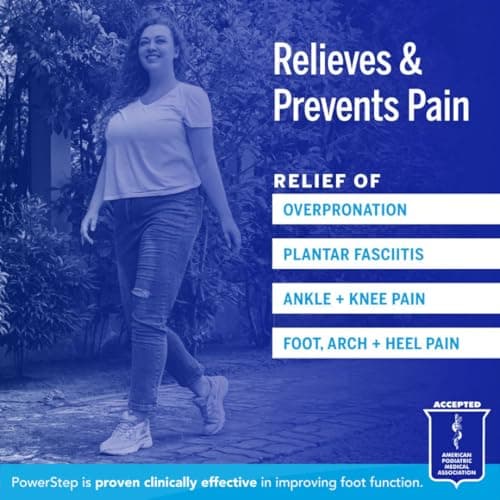
By day three, something shifted. I stopped noticing the insoles entirely — which, for anyone dealing with foot pain, is the highest compliment you can pay a foot support product. My knee didn't ache after my afternoon walk. The hip tightness I'd been attributing to sleeping wrong had eased. Was it the insoles? Possibly. The overpronation correction means my body mechanics improved incrementally with every step, and overpronation-induced compensation pain tends to live in the knees and hips before it shows up in the feet themselves.
What surprised me was the versatility. I moved them from work boots to running shoes to my weekend Chelsea boots without issue — the key being that all three have removable factory insoles. I tried them in a pair of slip-ons I keep for quick errands and couldn't get the original insole out; the Maxx wouldn't fit alongside it, and forcing it would have created pressure points instead of support. That's worth knowing before you buy: measure your shoe's insole cavity or assume you'll need to test only in footwear with removable inserts.
After two weeks, the cushioning hasn't compacted, the arch still feels supportive, and I've had zero heel pain on mornings I've worn them. The verdict is solid — these orthotic insoles for overpronation do what PowerStep claims.
Who Should Buy It?
- Flat-footed folks with overpronation who need genuine arch correction, not just cushioning — the Maxx delivers structural support that softer insoles can't match
- Plantar fasciitis sufferers dealing with first-step morning pain and all-day heel discomfort — the deep heel cradle and dual-layer cushioning address this directly
- Workers on their feet all day — nurses, retail workers, warehouse staff — who need durable support that survives 8-10 hours of continuous wear
- Runners with pronation issues who want stability without switching to motion-control shoes
- Skip these if: you need a soft, cushy insole for occasional comfort — the firm arch is therapeutic, not plush. Also skip if your shoes don't have removable factory insoles — the Maxx won't fit otherwise.
Alternatives Worth Considering
PowerStep Pinnacle (non-Maxx) — Same brand, slightly thinner profile, less aggressive heel post. Better if you have mild overpronation or want a gentler transition into orthotic support. Easier break-in, slightly less correction.
Superfeet Green Heritage — High-density foam with a pronounced heel cup. Excellent for aggressive overpronation control but known for an even longer break-in period than the Maxx. Better suited for athletic shoes than dressier footwear.
Spenco Polysorb Cross-Trainer — More cushion-focused with less arch rigidity. A good compromise if you want some correction but prioritise shock absorption over structural realignment. Pricier and less durable under heavy daily use.
FAQ
Yes — the slightly angled heel post and deep heel cradle work together to prevent your foot from rolling inward. In my testing, the correction was noticeable from the first wear, though the firm arch takes a few days to fully adapt to.
Final Verdict
The PowerStep Pinnacle Maxx orthotic insoles earn their reputation as a serious tool for overpronation and flat feet management. The slightly angled heel post does what it's supposed to — it stops your feet from rolling inward and, over time, reduces the cascading pain in your knees and hips that poor foot mechanics cause. The dual-layer cushioning holds up, the arch doesn't flatten by month two, and they're built to last. Yes, the break-in period is real. Yes, they require shoes with removable factory insoles. And yes, they're pricier than the drugstore two-packs. But if you've been limping through mornings or nursing knee pain you didn't know came from your feet, the Maxx is the kind of upgrade that pays you back every step you take. Check current price on Amazon — prices fluctuate, and catching a sale makes an already solid investment even easier to justify.