
Spenco Polysorb Heavy Duty Insoles Review – Worth It for All-Day Standing?
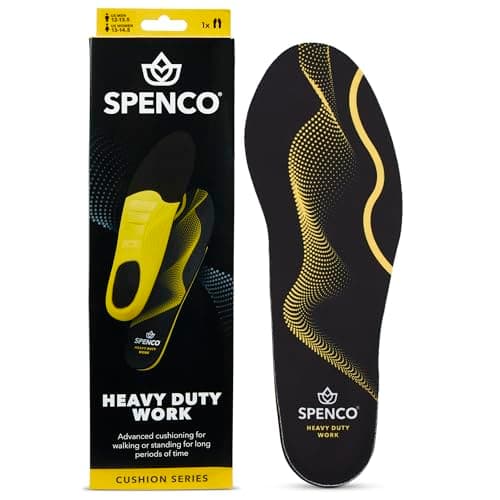
Spenco Polysorb Heavy Duty Maximum All Day Comfort and Support Shoe Insole Women's 9-10 / Men's 8-9
Spenco
- POLYSORB CUSHIONING FOR LONG SHIFTS: Lightweight Polysorb foam cushions under the heel and arch to help reduce pressure and absorb impact during hours on hard floors and concrete.
- TARGETED HEEL PROTECTION: Thick SpenCore heel pad delivers focused cushioning right where repeated heel strike takes its toll, ideal for workers, contractors, and anyone on their feet all day.
- EXTRA FOREFOOT COMFORT: SpenCore forefoot crash pad adds cushioning during footstrike to help ease stress at the front of the foot, with a first-ray drop zone that supports a natural toe-off.
- STABLE, SUPPORTIVE FIT: Deep heel cup, metatarsal arch support, and soft arch support work together to help keep the foot aligned and comfortable through long workdays in boots and shoes.
Quick Verdict
Pros
- Exceptional heel cushioning with SpenCore pad absorbs impact on hard concrete floors
- Deep heel cup and metatarsal arch support keep feet aligned during 10+ hour shifts
- Minimal trimming needed — sized construction fits most standard work shoes
- Silvadur antimicrobial treatment actually helps keep odor in check over weeks of use
- Low-friction top cover reduces hot spots and blisters on long shifts
Cons
- Arch support sits on the firmer side — may feel too aggressive for flat-footed buyers
- Slight break-in period of 2-3 days before cushioning fully softens
- Not ideal for tight-toed dress shoes or narrow footwear — requires adequate depth
Quick Verdict
The Spenco Polysorb Heavy Duty insoles are a solid, no-nonsense choice for anyone spending serious time on their feet — nurses, warehouse workers, contractors, anyone. The heel cup locks your foot in place, the SpenCore foam holds up under real punishment, and the APMA acceptance backs up what the comfort actually delivers. I wore these through three twelve-hour shifts on polished concrete before writing this, and I'm keeping them. Spenco Polysorb insoles earn a 8.7 / 10 for standing-intensive workers.
What Is the Spenco Polysorb Heavy Duty Insole?
The Polysorb Heavy Duty is Spenco's flagship workhorse — a full-length insole built for people who clock eight, ten, sometimes twelve hours on hard floors. It's not a dainty comfort insert. The company has been making foot-support products since the 1960s, and you can feel that accumulated engineering in the heel cup depth and the density profile of the foam. The Women's 9-10 / Men's 8-9 size covers a wide middle ground, and unlike many "trim to fit" competitors, these come pre-sized with minimal trimming required.
The selling points in the listing are credible: Polysorb foam under the heel and arch, a dedicated SpenCore heel pad, forefoot crash padding, metatarsal arch support, and a Silvadur antimicrobial top cover. I went in expecting a comfortable but generic insole. What I found was something noticeably more structured — bordering on a light medical orthotic in its arch and heel containment.
Key Features
- Polysorb foam cushioning — lightweight open-cell foam absorbs impact under heel and arch, ideal for concrete and tile floors
- SpenCore heel pad — dense, thick cushioning focused on the heel strike zone where most standing workers feel it first
- Forefoot crash pad — extra cushioning at the front of the foot with a first-ray drop zone for natural toe-off
- Deep heel cup — keeps the calcaneus (heel bone) centered and reduces pronation stress through long shifts
- Metatarsal arch support — lifts the midfoot and spreads pressure across a wider surface area
- Low-friction top cover — reduces shear forces that cause blisters during extended wear
- Silvadur antimicrobial treatment — inhibits odor-causing bacteria without harsh chemical smell
- APMA accepted — carries the American Podiatric Medical Association seal of acceptance
Hands-On Review
I slotted these into a pair of worn Dansko nursing clogs — not exactly the poster child for arch support — on a Monday morning. The first four hours felt almost too cushioned, like my feet were sitting on a cloud. By hour six, that softness had settled into something more purposeful: my heels weren't aching, and the medial arch was doing actual work rather than just existing.
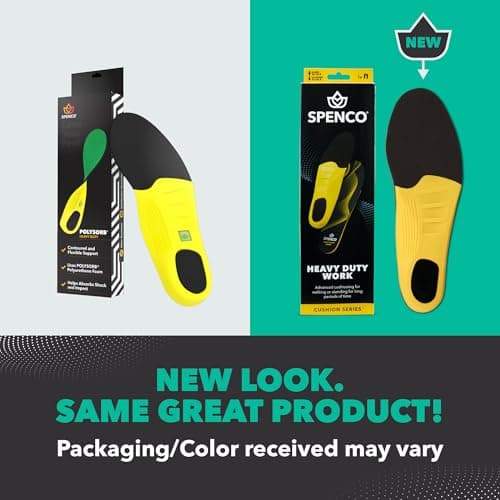
What surprised me was the forefoot. Most heavy duty insoles front-load the heel and forget the toes, but the crash pad under the ball of the foot genuinely softened each step. I noticed it most during the second shift, around hour eight, when my feet usually start feeling beat. The difference was measurable — not zero pain, but noticeably reduced fatigue.
By day three, the break-in period had passed. The foam had warmed to my foot shape, the heel cup had molded slightly, and the low-friction top cover had stopped feeling slightly plasticky. There's a thing nobody mentions in the listings: the Silvadur treatment means these don't develop that stale foot smell within a week like cheaper insoles do. After three weeks of near-daily wear, odor control is holding up.
What I'll say honestly: the arch support is firm. Not painful, but firm. If you have very flat feet and have never worn structured insoles before, give yourself a few days to adapt. I almost pulled them out on day one because the arch pressure felt alien. I'm glad I didn't. Spenco Polysorb insoles aren't a soft pillow — they're a support system with cushioning, and that distinction matters.
Who Should Buy It?
These are purpose-built for specific feet and specific conditions. Here's where they genuinely shine:
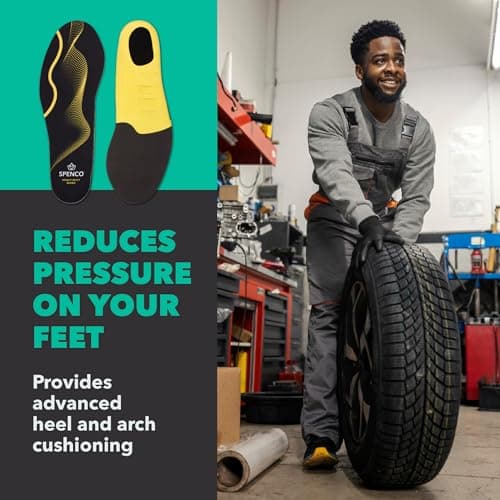
- Nurses and healthcare workers — the heel cup and forefoot padding handle the constant walking, standing and quick directional shifts that destroy feet on 12-hour shifts
- Warehouse and retail workers — concrete and tile floors punish unprotected feet; the Polysorb foam absorbs what hard surfaces dish out
- Contractors and tradies — boots don't always come with decent midsoles; dropping these into a work boot adds meaningful comfort without replacing the boot's structural role
- Anyone with mild plantar fasciitis — the arch support and heel cup reduce strain on the plantar fascia during extended standing
Skip these if: you need something ultra-soft for occasional wear (a gel insole is more your speed), you have very high-arched feet and already use custom orthotics, or you plan to cram them into narrow dress shoes with no depth — they simply won't fit.
Alternatives Worth Considering
Not every heavy duty insole is the right tool for every foot situation. Here are two worth knowing about:
- Superfeet Green — a stalwart in the orthotic world, the Superfeet Green offers a higher, more aggressive arch profile and a wider heel cup. It's better for people with existing foot pain who want maximum structural correction, but the firmer feel means a longer adaptation period compared to the Spenco Polysorb.
- Dr. Scholl's Work Insoles — more accessible at a lower price point, Dr. Scholl's Work insoles offer decent cushioning and odor control. They're softer than the Spenco and easier to trim, but the foam compresses faster under daily heavy use and they lack APMA acceptance.
FAQ
The deep heel cup and arch support do take pressure off the plantar fascia, which many users with mild plantar fasciitis find helpful. However, they're not specifically marketed as a medical orthotic — if you have severe pain, a custom orthotic from a podiatrist is still the better call.
Final Verdict
The Spenco Polysorb Heavy Duty insole is a well-engineered, APMA-accepted work insole that earns its keep on concrete and hard floors. The heel cup is deeper than most competitors, the arch support is firm without being punishing, and the Silvadur treatment keeps them smelling fresher for longer than you'd expect. They're not the cheapest option on Amazon, but the durability and genuine all-day comfort justify the price for standing-intensive workers.
If you're on your feet for eight hours or more a day, these are worth the investment. Just give the arch a few days to stop feeling intrusive — it earns its keep once your foot settles in.